
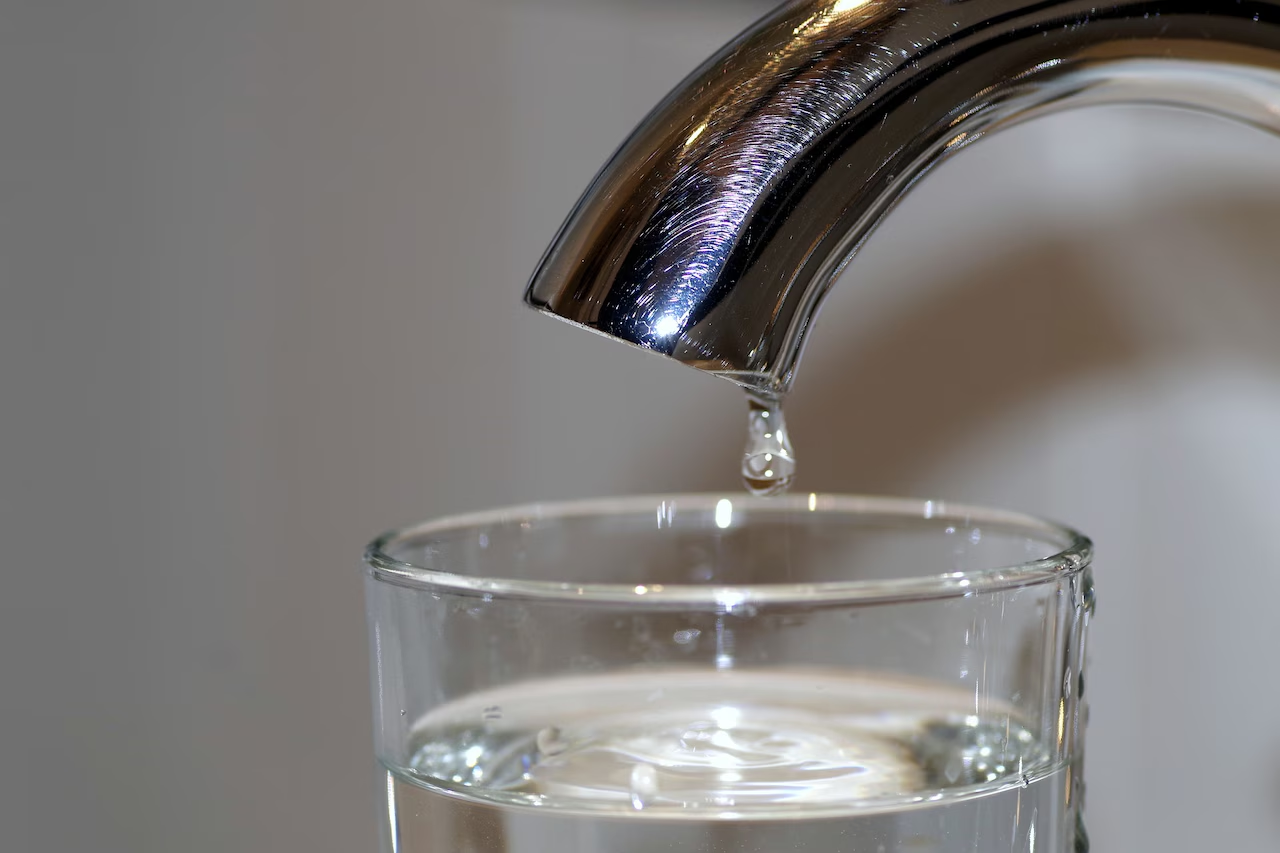
If you live in a Jersey City apartment building and your landlord tells you the fixtures are “lead-free,” it can sound reassuring. Stainless steel faucets. Modern valves. Recently renovated kitchens.
But here’s what many residents don’t realize:
“Lead-free” does not mean zero lead.
And it definitely doesn’t guarantee that your tap water is lead-free.
In multi-unit buildings especially in a city like Jersey City with mixed-age infrastructure water safety depends on more than just the faucet you see.
Here’s what tenants and landlords need to understand.
What “Lead-Free” Actually Means
Under federal law, plumbing fixtures labeled “lead-free” can still legally contain up to 0.25% lead in wetted surfaces. That standard was strengthened in 2014, but it does not mean absolute zero.
According to the U.S. Environmental Protection Agency (EPA), lead typically enters drinking water through corrosion of plumbing materials not from the treatment plant itself (https://www.epa.gov/ground-water-and-drinking-water/basic-information-about-lead-drinking-water).
That means even newer fixtures can contribute small amounts of lead under certain conditions, especially when:
- Water is slightly acidic
- Pipes are aging behind the walls
- Water sits stagnant overnight
- Brass fittings are present
In other words, “lead-free” reduces risk but it doesn’t eliminate it.
The Bigger Risk: What You Don’t See
In Jersey City apartment buildings, water flows through:
- Underground service lines
- Building supply lines
- Vertical risers
- Interior branch pipes
- Fittings and solder joints
A new faucet at the sink doesn’t replace all those components.
Many apartment buildings in Jersey City were constructed before 1986, when lead solder was still common. Even properties renovated in the 2000s may still connect to legacy plumbing within walls or shared risers.
Residents reviewing local water information often discover that municipal water may meet regulatory standards but building-specific plumbing can still influence what comes out of the tap.
Shared Plumbing in Apartment Buildings
Unlike single-family homes, apartment buildings rely on shared plumbing systems. That means your unit’s water may pass through pipes serving dozens of other apartments.
If corrosion is occurring in one section of a riser, multiple units can experience elevated lead levels even if individual kitchens look modern.
Buildings located in certain older locations may face higher risk simply due to construction era and infrastructure history.
That’s why apartment residents shouldn’t assume visual upgrades equal water safety.
Why Lead Is Especially Concerning
Lead doesn’t change the taste, color, or smell of water. It can be completely invisible.
The EPA and Centers for Disease Control and Prevention (CDC) agree that no safe blood lead level has been identified for children. Even low levels of exposure may impact development over time.
Infants and young children are particularly vulnerable because:
- Their brains are still developing
- They absorb lead more efficiently than adults
- They consume more water relative to body weight
In apartment buildings with families, this makes proactive testing especially important.
First-Draw Water Is Often the Highest Risk
Lead levels are typically highest in “first-draw” water meaning water that has sat in pipes for six hours or more.
If you fill a glass first thing in the morning, that water has had time to interact with plumbing materials.
This is why professional water testing services often include first-draw samples followed by flushed samples. Comparing the two helps determine whether the issue stems from internal plumbing corrosion.
Renovated Buildings Still Aren’t Immune
Many Jersey City apartment buildings have undergone cosmetic renovations:
- Updated kitchens
- Modern bathrooms
- New fixtures
But full plumbing replacements are expensive and often skipped during renovations.
A building can advertise modern amenities while still relying on original risers behind the walls.
This is one of the most common misconceptions tenants have: assuming new surfaces mean new infrastructure.
For more education on how plumbing age affects water safety, residents can explore the company’s blog for deeper insight.
What Tenants and Landlords Can Do
If you live in or manage an apartment building, consider these steps:
For tenants:
- Run cold water for 60–90 seconds before drinking, especially in the morning
- Use only cold water for cooking and infant formula
- Consider certified lead-reducing faucet filters
- Request water testing documentation from management
For landlords:
- Conduct periodic independent testing
- Document results transparently
- Inspect older risers and service lines
- Address corrosion proactively
Common concerns about building testing and compliance are addressed in the FAQ section.
Testing Is the Only Way to Know
Because lead is invisible, guessing isn’t enough.
Professional testing measures:
- Lead concentration (µg/L)
- Copper levels
- pH (which affects corrosion)
- Other contributing factors
If results exceed conservative thresholds, corrective action can begin immediately whether that involves flushing protocols, filtration systems, or infrastructure upgrades.
If you’re unsure where your building stands, reaching out through the contact page allows you to schedule testing specific to your address.
Why This Matters in Jersey City
Jersey City’s housing stock spans over a century of construction. Brownstones, mid-century apartment blocks, converted industrial spaces, and modern high-rises all coexist within a few blocks of each other.
That diversity means water risk profiles vary dramatically by building.
A blanket statement like “our fixtures are lead-free” doesn’t account for:
- Shared plumbing
- Service line materials
- Corrosion inside aging pipes
- Seasonal chemistry changes
Local expertise ensures testing reflects the realities of Jersey City infrastructure not generic assumptions.
Final Thoughts
“Lead-free” sounds definitive but in plumbing, it’s a regulatory term, not a guarantee.
In Jersey City apartment buildings, water safety depends on the entire plumbing system, not just the faucet you see.
The only way to truly know what’s in your water is to test it.
For tenants, that means peace of mind.
For landlords, it means responsible property management.
For families, it means protection where it matters most.
Because when it comes to lead, clarity isn’t optional it’s essential.