
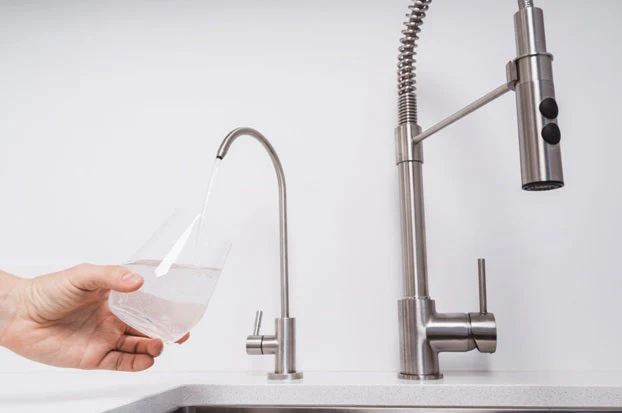
In Jersey City kitchens, under-sink water filters have become increasingly common. Homeowners and tenants install them for better taste, reduced chlorine, or added peace of mind.
But here’s the uncomfortable truth: not all filters remove the contaminants people assume they do.
If you haven’t tested your water first and if you don’t know exactly what your filter is certified to remove your under-sink system may not be addressing the real issue.
Here’s what Jersey City residents should understand before relying on a filter alone.
Not All Filters Remove the Same Contaminants
Under-sink filters vary widely in capability.
Some are designed primarily for:
- Taste and odor improvement
- Chlorine reduction
- Sediment removal
Others are certified to reduce:
- Lead
- Cysts
- Certain volatile organic compounds (VOCs)
But very few filters remove everything.
According to the U.S. Environmental Protection Agency (EPA), contaminants in drinking water can range from metals to microbial agents to chemical byproducts (https://www.epa.gov/ground-water-and-drinking-water/national-primary-drinking-water-regulations).
Without knowing what’s present in your tap water, choosing a filter is essentially guesswork.
Taste Improvement Doesn’t Equal Safety
Many Jersey City residents install filters after noticing:
- Metallic taste
- Strong chlorine smell
- Cloudiness
- Bitter flavor
While activated carbon filters are excellent for improving taste and odor, they may not remove dissolved metals effectively especially if the system isn’t certified for lead reduction.
Reviewing general local water information can help you understand common regional concerns, but only testing your specific address confirms what’s actually in your water.
Lead Requires Specific Certification
If your concern is lead especially in homes built before 1986 the filter must be certified under NSF/ANSI Standard 53 or 58 for lead reduction.
Some basic under-sink filters only reduce chlorine and sediment, not dissolved lead.
According to the EPA, lead most commonly enters drinking water through corrosion of plumbing materials such as pipes and solder (https://www.epa.gov/ground-water-and-drinking-water/basic-information-about-lead-drinking-water).
If corrosion is occurring upstream in older pipes common in certain Jersey City locations a basic carbon filter may not be enough.
Professional water testing services can identify whether lead, copper, iron, or other contaminants are present before you select a filtration system.
Filters Don’t Fix Plumbing Problems
An under-sink filter treats water at a single tap.
It does not:
- Replace aging galvanized pipes
- Address corroded service lines
- Stabilize water heater sediment
- Protect bathroom or shower fixtures
If your building has shared risers or older infrastructure, the filter is managing symptoms not solving the source.
In condos and multi-unit buildings, plumbing conditions vary by stack and construction era.
Educational insights into corrosion and infrastructure issues are available in the company’s blog for those who want a deeper understanding.
Common filtration and testing questions are also addressed in the FAQ section.
Maintenance Is Often Overlooked
Even high-quality filters lose effectiveness over time.
If cartridges are not replaced as recommended:
- Lead reduction performance can decline
- Bacteria can grow inside saturated media
- Flow rate can decrease
- Contaminants may bypass the filter
Many homeowners forget to track replacement schedules, reducing long-term protection.
Testing provides a baseline and helps confirm whether your filtration system is working as intended.
If you’re unsure whether your current filter matches your water profile, the contact page provides direct access to professional evaluation.
When Testing Is Smarter Than Guessing
Before purchasing or relying on an under-sink filter, consider testing if:
- Your home was built before 1986
- You’ve noticed persistent taste changes
- Construction occurred nearby
- Plumbing renovations were recently completed
- You live in an older co-op or apartment building
Testing answers key questions:
- What contaminants are present?
- At what concentration?
- Do you need filtration at all?
- Which certification standard is appropriate?
Without that information, you may be filtering the wrong problem.
Why This Matters in Jersey City
Jersey City’s diverse infrastructure means water conditions vary dramatically by building age and plumbing history.
A modern condo tied into older municipal lines may have different risk factors than a newly constructed tower.
Installing a filter without testing is like buying medicine without a diagnosis.
Final Thoughts
The under-sink filter you bought might not catch what’s really there.
While filters can improve taste and reduce certain contaminants, they are not one-size-fits-all solutions.
Testing first ensures you choose the right system or confirms that your water is already within safe limits.
In a city with layered plumbing history, informed decisions protect your household better than assumptions.
Clear water isn’t enough.
Better-tasting water isn’t proof.
Verified water is what matters.