
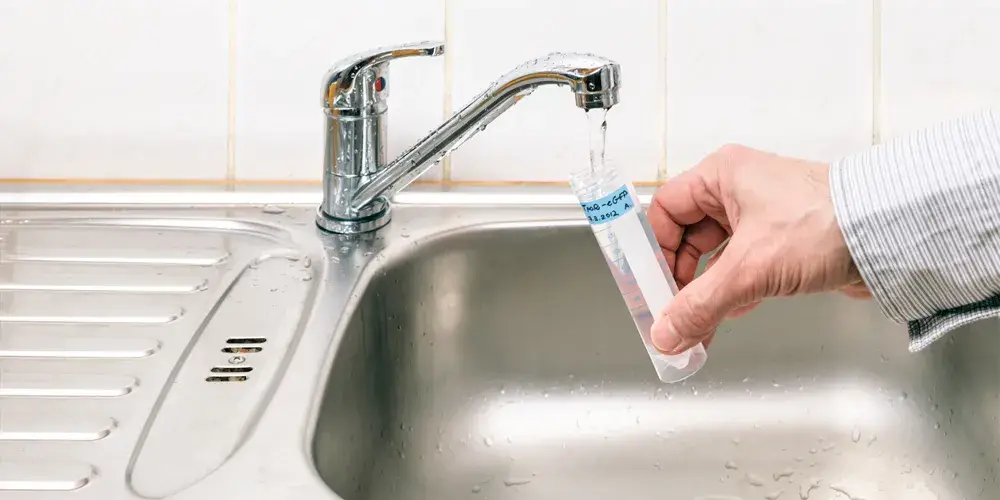
Apartment living can make water quality feel confusing. If you own a single-family home, it is easier to think about your own pipes, fixtures, filters, and service line. But in an apartment, condo, brownstone unit, or multi-family building, the water may pass through shared plumbing before it reaches your kitchen faucet. That means your tap water can be affected by the public supply, the building’s plumbing, the unit’s fixtures, and how water is used throughout the property.
For Jersey City apartment residents, this matters because many buildings are older, renovated in stages, or connected to plumbing systems that may not be easy to see. Clear water does not always mean there are no concerns. Taste and smell can give clues, but they cannot confirm everything.
Water testing gives apartment residents a practical way to understand what is happening at their own tap. Whether you rent, own a condo, manage a unit, or live in a multi-family property, testing can help replace guesswork with clearer information.
Start with the Tap You Use Most
If you drink and cook from the kitchen faucet, that is usually the most important tap to test first. Bathroom sinks, laundry taps, and utility sinks may have different fixtures or plumbing branches, but the kitchen tap is often where drinking water decisions happen.
Testing water from the actual tap you use matters because results can vary from one faucet to another. A kitchen faucet with an older fixture may show different results than a newer bathroom faucet. A filtered refrigerator dispenser may show different results than unfiltered tap water.
For apartment residents, property-specific testing can be more useful than general assumptions about the building. Your unit may have its own fixture conditions, water-use patterns, or filter setup.
Olympian Water Testing Jersey City helps residents focus on the tap where water is actually used.
Ask About Building Plumbing
Apartment residents should ask the landlord, property manager, condo board, or building maintenance team about plumbing age and service line information. Helpful questions include:
When was the building built?
Has the plumbing been updated?
Are there known lead service lines?
Has water testing been done recently?
Were there any recent plumbing repairs?
Are there shared water tanks, filters, or treatment systems?
These questions may not always get complete answers, but they can start the conversation. Older buildings, recently renovated units, and properties with unknown service line materials may benefit from testing.
For local water context, visit the local water page.
Know That City Testing and Unit Testing Are Different
Public water systems are monitored under federal and state requirements. That monitoring is important, but it does not always tell you what is happening at your specific apartment faucet. Water can change as it moves through service lines, building pipes, valves, fixtures, and filters.
A Consumer Confidence Report may give useful information about the wider water system, but your own unit may still have questions related to plumbing materials, corrosion, or stagnant water.
The U.S. Environmental Protection Agency explains that water can pick up lead from service lines and plumbing materials, and testing is the only sure way to know whether lead is present in drinking water. You can review EPA guidance through its basic information about lead in drinking water.
For apartment residents, this distinction is important. System-level information and tap-level testing answer different questions.
Watch for Taste, Odor, and Staining
Water quality problems are not always visible, but some signs are worth paying attention to. Metallic taste, chlorine odor, rotten-egg smell, cloudiness, brown or yellow color, black particles, blue-green stains, orange stains, or white scale buildup can all point to different water conditions.
These signs do not always mean the water is unsafe, and they do not all have the same cause. For example, orange staining may suggest iron, while blue-green staining may suggest copper. White buildup may point to hardness minerals. A strong smell may involve disinfectant, plumbing, or drain issues.
Testing helps identify what is actually present. Without testing, apartment residents may buy the wrong filter or worry about the wrong concern.
The water testing page can help residents understand testing options for different concerns.
Do Not Rely Only on a Filter
Many apartment residents use pitcher filters, faucet filters, refrigerator filters, or under-sink systems. Filters can be helpful, but they are not all designed for the same purpose. A filter that improves taste may not remove lead. A filter certified for lead may not address bacteria. A refrigerator filter may be expired or installed incorrectly.
Testing can help you choose the right filter. It can also help confirm whether a filter is working as expected.
If you are concerned about lead, look for a filter certified for lead reduction by an independent testing organization. Follow the filter’s instructions carefully and replace cartridges on schedule. A neglected filter may not provide the protection you expect.
Filters are useful tools, but testing tells you what problem the filter should solve.
Test Before and After Filtration
If you already use a filter, consider testing both unfiltered and filtered water. Testing unfiltered tap water helps show what is coming from the faucet. Testing filtered water helps show whether the filter is reducing the concern.
This can be especially helpful in apartments where residents may not control building plumbing. A good filter may be a practical short-term solution while building-level questions are being addressed.
However, not every issue can be solved with a simple filter. Some concerns may require building maintenance, fixture replacement, plumbing inspection, or follow-up testing.
For residents unsure where to begin, the services page can help explain available testing support.
Understand First-Draw Water
For certain tests, especially lead, sample timing matters. First-draw water is water collected after it has been sitting in the pipes for several hours, often overnight. This type of sample may show what water picks up from plumbing during stagnation.
Flushed water is collected after running the tap for a period of time. It may show different results because stagnant water has been cleared from the pipes.
Apartment residents should follow sampling instructions carefully. If a test is collected the wrong way, the results may be harder to interpret.
Professional testing helps make sure the sample matches the concern being investigated.
Use Cold Water for Drinking and Cooking
A simple precaution in older buildings is to use cold tap water for drinking and cooking. Do not use hot tap water for cooking, coffee, tea, baby formula, or drinking. Hot water can dissolve metals from plumbing more quickly than cold water.
The EPA advises using only cold water for drinking, cooking, and making baby formula when lead may be a concern. It also explains that boiling water does not remove lead.
If you need hot water, start with cold water and heat it separately. This habit is simple and useful, especially in older apartments where plumbing materials may be unknown.
Let Water Run After Long Stagnation
If water has been sitting in the pipes for several hours, such as overnight or while you were away, letting the cold tap run before use may reduce water that has been sitting in plumbing. Some residents run water until it becomes noticeably colder.
This is not a substitute for testing or certified filtration, but it can be part of a practical routine when lead or plumbing-related metals are a concern.
In apartment buildings, water-use patterns can vary. Some pipes may have frequent flow, while others may sit unused for long periods. Testing helps clarify your own unit’s conditions.
Clean Faucet Aerators
The faucet aerator is the small screen at the end of the faucet. It can collect sediment, particles, and mineral buildup. In older buildings, aerators may not be cleaned often.
Unscrew the aerator if possible, rinse it, remove debris, and replace it if damaged. If you are not sure how to remove it, ask maintenance or a plumber.
A dirty aerator can affect water flow and may trap particles. Cleaning it is a simple maintenance habit that supports better tap water quality.
This is especially useful after plumbing work, nearby construction, water main repairs, or visible sediment events.
Pay Attention After Building Repairs
Apartment water quality can change after plumbing repairs, pipe replacement, water heater work, construction, or service line activity. Disturbing old pipes may release sediment or temporarily affect water appearance.
If the building recently had water shut off, plumbing work, or brown water reports, follow any guidance from building management or the water provider. Let taps run as directed, clean aerators, and consider testing if concerns continue.
A post-repair test can help residents understand whether conditions have returned to normal or if additional steps are needed.
Water testing is useful not only before a problem, but also after a plumbing change.
Renters Can Still Test Their Water
Some renters assume only landlords can test water, but tenants can often test water from their own taps. This can be useful if there are young children, pregnancy, health concerns, older fixtures, or unanswered questions about plumbing.
If testing shows a concern, renters can share results with the landlord or property manager and ask about next steps. Depending on the issue, this may involve fixture inspection, certified filtration, plumbing maintenance, or follow-up testing.
Renters should keep copies of test results and written communication.
Water quality is part of daily living, and apartment residents deserve clear information.
Condo Owners Should Think Beyond Their Unit
Condo owners may own their unit but share building plumbing systems. This can make water quality responsibility more complex. A concern may involve the unit’s fixture, a branch line, shared plumbing, or building infrastructure.
Testing your own tap is still a useful first step. If a concern appears, the next step may be discussing results with the condo association, building management, or maintenance team.
In multi-unit buildings, testing more than one location can sometimes help identify whether an issue is isolated or building-wide.
For service coverage, residents can check the locations page.
Businesses in Apartment-Style Buildings Should Test Too
Many Jersey City businesses operate in mixed-use buildings, converted spaces, older storefronts, or shared properties. If your business uses water for coffee, tea, ice, food prep, customer service, wellness services, or employee drinking water, tap testing can be useful.
Commercial spaces may have unique plumbing conditions. Some taps may sit unused overnight or over weekends. Older fixtures may remain even after interior renovations.
Testing gives business owners a clearer understanding of water quality at the taps they rely on every day.
What Should an Apartment Water Test Include?
The right water test depends on the concern. Many apartment residents may want to test for lead and copper, especially in older buildings. Others may add testing for hardness, pH, iron, manganese, chlorine, total dissolved solids, or bacteria depending on symptoms and property conditions.
If there is a specific taste, odor, stain, or discoloration problem, the test panel should match that concern. A generic test may not answer every question.
Professional guidance can help apartment residents choose a test that fits the property and the reason for testing.
For common questions, visit the FAQ page.
Do Not Wait Until Water Looks Bad
Apartment residents should not wait for obvious discoloration before thinking about water quality. Some of the most important concerns are invisible. Clear water can still be affected by lead, copper, or other factors related to plumbing.
Testing is especially useful when moving into an older apartment, after a renovation, after plumbing repairs, before choosing a filter, or when household members are more sensitive to water quality concerns.
A baseline test can help you understand normal conditions and compare future results if something changes.
Final Thoughts
Jersey City apartment residents can take practical steps to check their tap water quality. Start with the faucet you use most. Ask about building plumbing. Understand that public water reports and apartment tap tests answer different questions. Watch for taste, odor, staining, and discoloration, but remember that clear water can still need testing.
Use cold water for drinking and cooking, clean faucet aerators, let water run after long stagnation, and choose filters based on actual test results. Renters, condo owners, landlords, and business owners can all benefit from tap-specific testing.
For apartment residents, water testing provides clarity in buildings where plumbing history may be hard to see. It helps identify concerns, guide filter choices, support conversations with management, and create more confidence in daily water use.
To learn more, visit the Olympian Water Testing Jersey City blog or reach out through the contact page to ask about testing options for your apartment, condo, rental, or business.